The architecture of stillness: On achievement, identity, and the difficulty of simply being
For some high-performing professionals, the most challenging task is often one that involves nothing at all. They can skillfully handle complex environments, yet feel uneasy when there is no structure to organise their attention. Without a goal, deadline, or measurable outcome, something less familiar begins to surface.
Stillness is often seen as naturally calming, as if removing demands should bring about peace. However, for many people, the opposite happens. When external structure disappears, the nervous system does not instantly settle, and the lack of direction can feel like a low-level activation without a clear focus. What appears, then, is not merely rest, but a space that the system has yet to learn how to inhabit. This reflects a system under sustained strain, which can begin to overlap with burnout.
The identity void
Without structure, a more disorienting experience can begin to emerge. The machinery of productivity, which once organised time, attention, and purpose, no longer operates, and without it, there is less to organise the self.
This is the identity void, not an absence of self, but the lack of the structures that usually define it. For those who have spent years orienting themselves through achievement, stillness can feel less like relief and more like exposure, as the familiar reference points that once guided them fall away. The question is no longer about what needs to be done, but rather something less instantly answerable: what remains when nothing is required?
The absence of direction
Much of high-performance life is structured around movement, towards goals, outcomes, and measurable progress. Attention is directed, effort is applied, and time is organised around what comes next. Stillness disrupts this orientation. Without a direction to pursue, attention loses its usual anchor, and the mind often begins to search for something to attach itself to, such as unfinished tasks, future plans, or problems that might be solved.
Even attempts at rest can acquire structure, as familiar habits of organisation extend into spaces not originally meant to contain them. However, when there is nothing to organise, the difficulty becomes more evident. Stillness is not hard because it is empty, but because it removes the structures that normally organise experience.
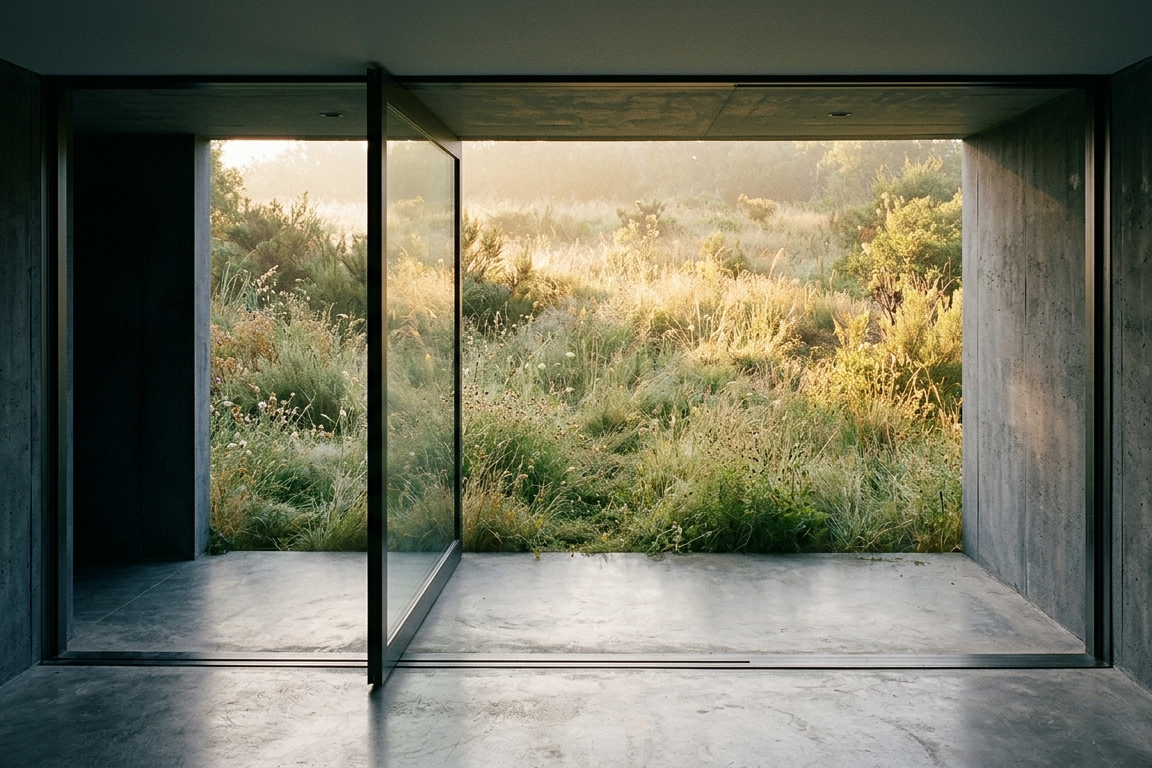
From orchestration to inhabitation
Many high performers see their lives as if they are directing an orchestra, standing slightly above their experience to observe, adjust, and ensure coherence. This fosters a sense of control and continuity, but it also distances the individual from the experience itself.
Living fully requires a different stance. It involves stepping away from the role of organiser and directly engaging with experience, allowing moments to unfold without trying to shape or control them beforehand. This change is not immediately comfortable. Without the familiar role of orchestration, there is less separation between the self and what is being felt.
The somatic anchor
Inhabiting experience is, at its core, a physical process. Many high-achieving individuals predominantly live in thought, using cognition to organise and interpret their lives with precision. This creates clarity, but it can also generate distance.
To relate differently to stillness often involves a shift in attention, from thinking about experience to sensing it directly. This might take the form of noticing breath, movement, or physical sensation, not as a technique to achieve a particular outcome, but as a way of re-establishing contact with the present moment. The body does not require direction in order to register experience. It requires attention.
Remaining in the unstructured
One of the less familiar aspects of stillness is the lack of immediate feedback. In structured environments, actions generate outcomes, and progress can be monitored, assessed, and understood. In stillness, experience develops without clear markers, a defined endpoint, or the typical signals that direct attention.
For some, sustained activity has long served as a form of regulation, and when it is removed, there is nothing immediately available to replace it. What remains is not merely emptiness, but a space that is unstructured, unmeasured, and initially challenging to locate oneself within.
Remaining here demands a different kind of capacity. Not effort in the usual sense, but the ability to stay with experience without needing to organise, interpret, or push it forward. It involves letting attention settle naturally without steering it, and allowing experience to unfold without trying to shape it into something useful.
What begins to emerge is not a better system, but a different relationship with experience, one that is less organised, less directed, and more directly inhabited. Stillness does not need to be made productive to be meaningful. It is simply the condition in which experience can occur without being structured in advance.
Stillness is not something to be solved, but something to inhabit.
If this feels familiar, you may recognise related patterns elsewhere. The Cost of Being the Strong One explores how responsibility and self-sufficiency shape a lasting orientation towards doing and managing, while The Optimisation Trap looks at how the drive to improve can extend into areas of life not meant to be structured in this way.
Dr Anne Li is a Chartered Counselling Psychologist with over fourteen years of clinical experience. She specialises in working with high-performing professionals, leaders, founders, and executives navigating burnout, perfectionism, relationships, identity, and life transitions.
If these reflections resonated, you can learn more about her approach to therapy here.